
Sensor sizes
Q: My question is not on this page? A: Ask it in the URL, for example /ask/is-full-frame-worth-it. Any question written as words after /ask/ works.
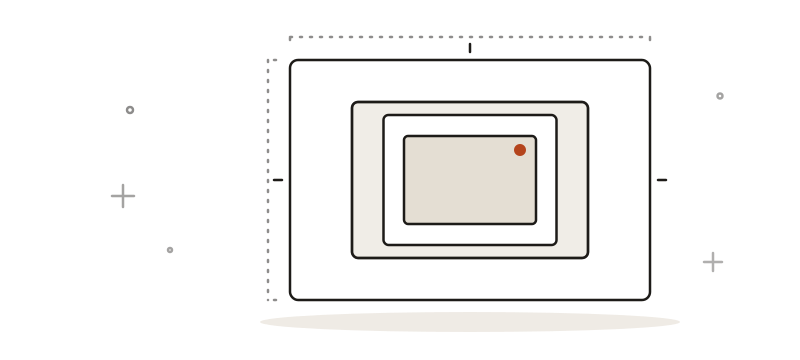
Sensor size is the biggest single difference between cameras, and the one most often oversold. Here's what it actually changes.
The main sizes
- Full frame (36 x 24mm, the size of a 35mm film frame). The reference size: when people quote a focal length "in full-frame terms", this is what they mean.
- APS-C (about 23 x 15mm). Crop factor about 1.5x (1.6x on Canon). Most entry and mid-range mirrorless cameras.
- Micro Four Thirds (about 17 x 13mm). Crop factor 2x. Small, light systems from OM System and Panasonic.
- 1-inch (about 13 x 9mm). Crop factor about 2.7x. Premium compacts.
- Phones use smaller sensors still, which is why they rely so heavily on processing.
Crop factor and field of view
Multiply a lens's focal length by the crop factor to get the full-frame equivalent view. A 35mm lens on APS-C frames like a 50mm on full frame. A 300mm lens on Micro Four Thirds frames like a 600mm. That's why smaller sensors are popular for wildlife: the same reach in a smaller, cheaper kit. The focal length converter does the sums for any pair of formats.
What a bigger sensor buys you
- Better low light. At the same framing and the same f-number, a bigger sensor collects more light in total, so images are cleaner at high ISO. Roughly, full frame has about one stop of advantage over APS-C, and two over Micro Four Thirds.
- Shallower depth of field. At the same framing and f-number, a bigger sensor gives more background blur. An f/1.8 lens on APS-C gives about the depth of field of f/2.8 on full frame.
- More dynamic range, usually, at base ISO.
What it costs you
- Size, weight and price, especially of the lenses. A full-frame telephoto is much larger than its APS-C or Micro Four Thirds equivalent.
- Less depth of field when you want more of it, for macro or landscape.
Is full frame worth it?
For low light, events, and portraits with very shallow depth of field, yes. For travel, street, wildlife on a budget, and most hobby photography, a good APS-C camera with good lenses is enough, and you'll carry it more. Lenses and light matter more than the last stop of sensor performance.


